

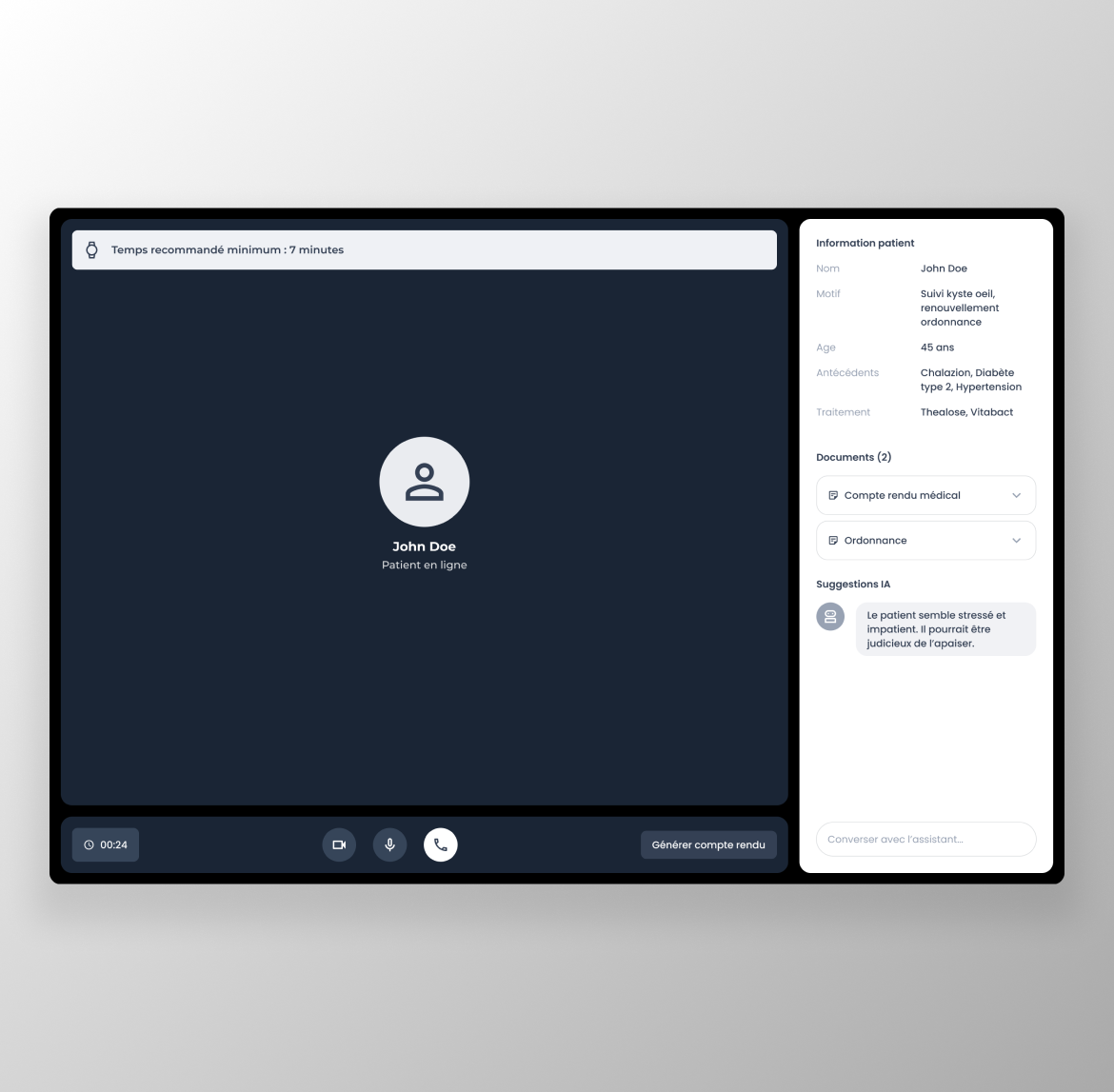
SocialDoc is a telemedicine solution deployed in pharmacies through connected medical cabins, designed to improve access to care in medical deserts. It allows patients to consult a doctor remotely, directly from their local pharmacy, for common medical needs.
I worked as a UX consultant with SocialDoc to address a major business and product challenge: an abnormally high patient churn rate. A large proportion of patients were using the service only once and not returning within a year. The objective of the mission was to understand why retention was low, formulate clear hypotheses, and design concrete solutions to encourage repeat usage.
The project started with a structuring phase focused on defining the right personas. I identified three distinct patient profiles with different motivations and usage patterns, as well as one doctor persona, to ensure that both sides of the experience were taken into account.
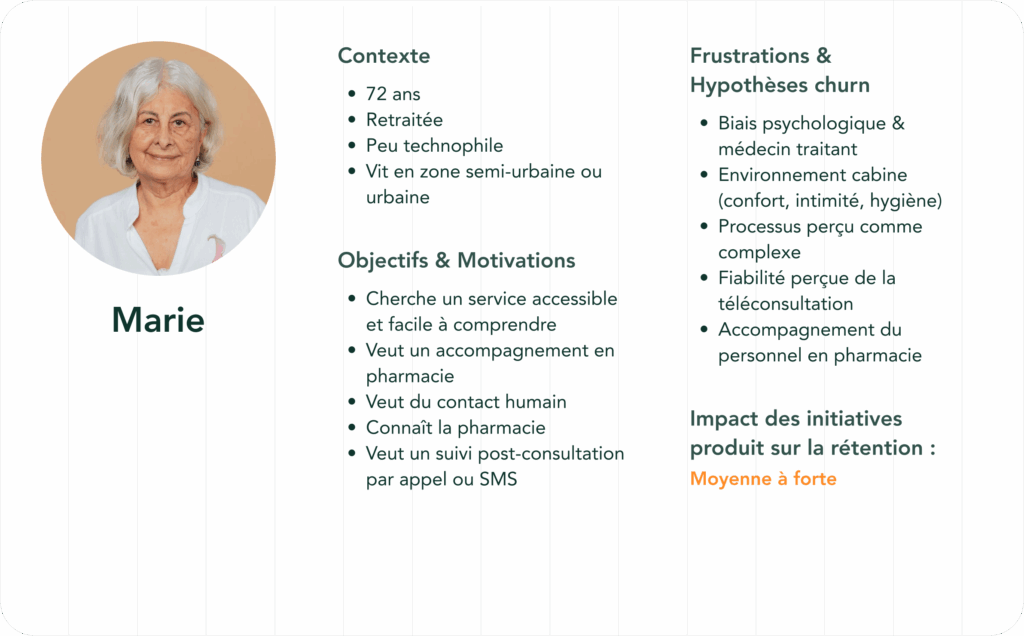
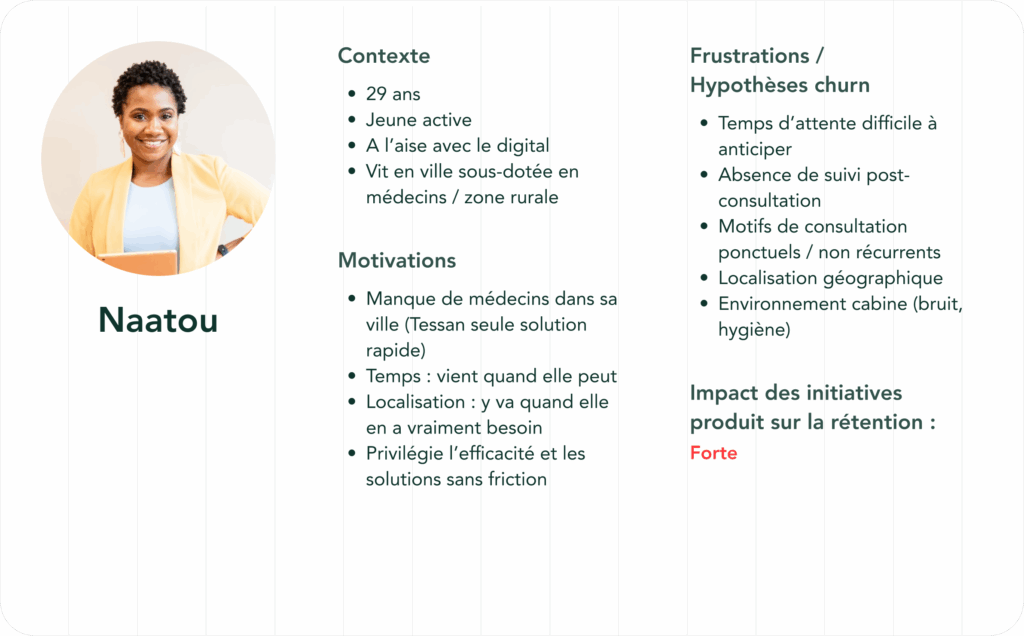
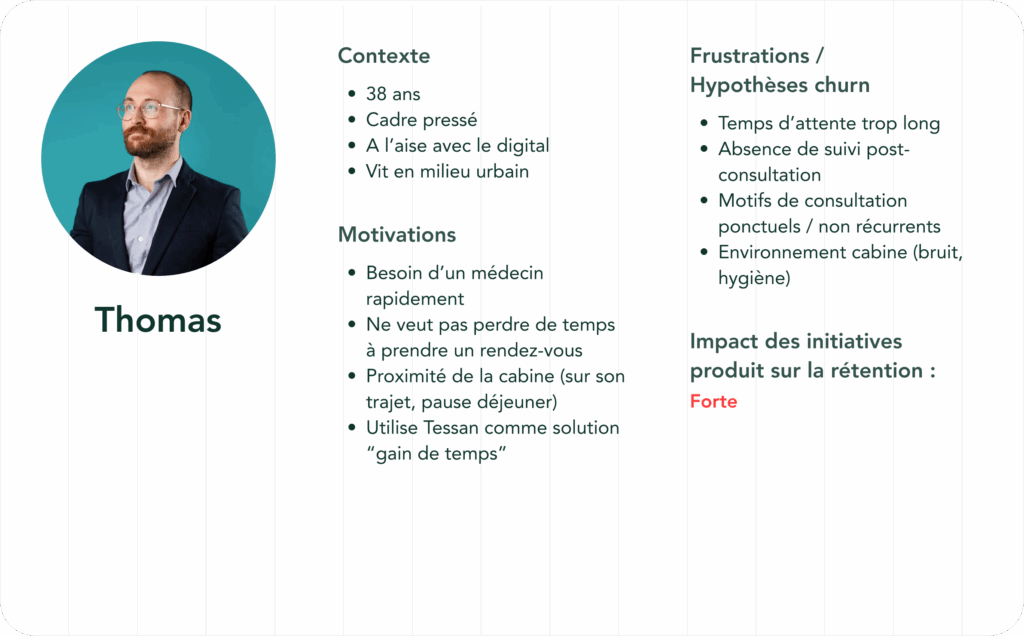
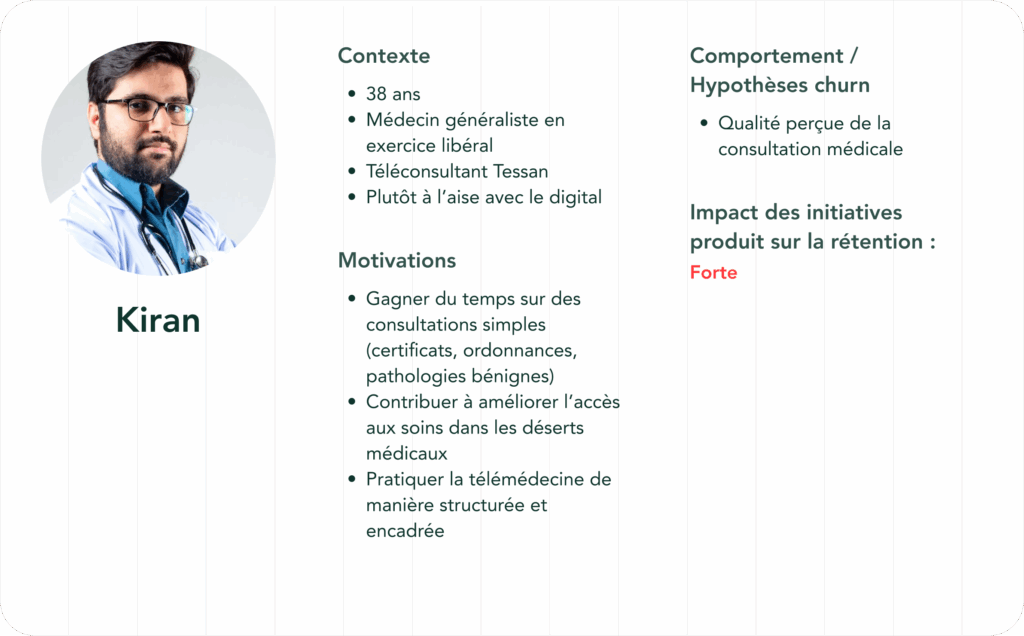
I then conducted a churn diagnosis based on the limited data available. Since the product was not yet strongly data-driven, I combined multiple qualitative and quantitative sources: Google and Trustpilot reviews, user feedback, patient interviews, internal metrics such as waiting times between consultations, and operational constraints observed in pharmacies. This analysis helped surface the main drivers of churn.
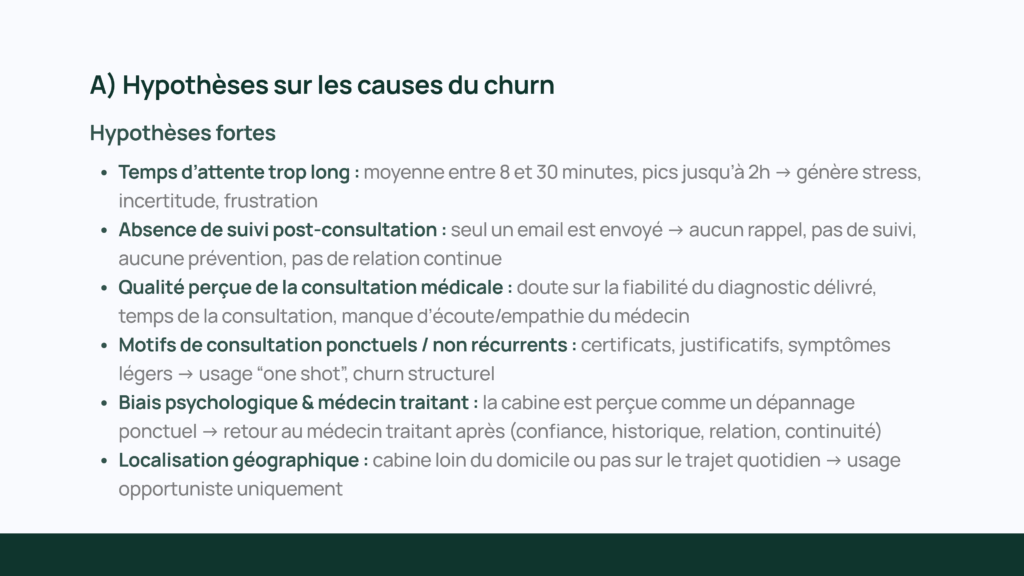
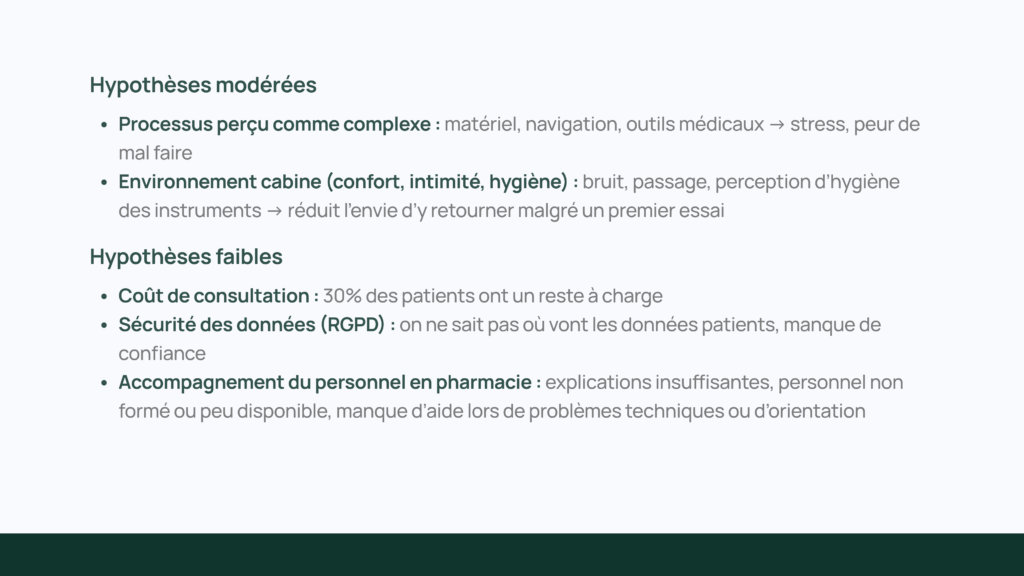
The strongest hypotheses were related to long and unpredictable waiting times, the absence of post-consultation follow-up, and doubts around the perceived quality of the medical consultation. Other factors included the one-off nature of many consultation motives, the perception of the cabin as a temporary backup solution compared to a family doctor, and the geographic location of the cabin, often far from patients’ daily routines. Secondary factors such as perceived complexity of the process or discomfort in the cabin environment also appeared to impact willingness to return.
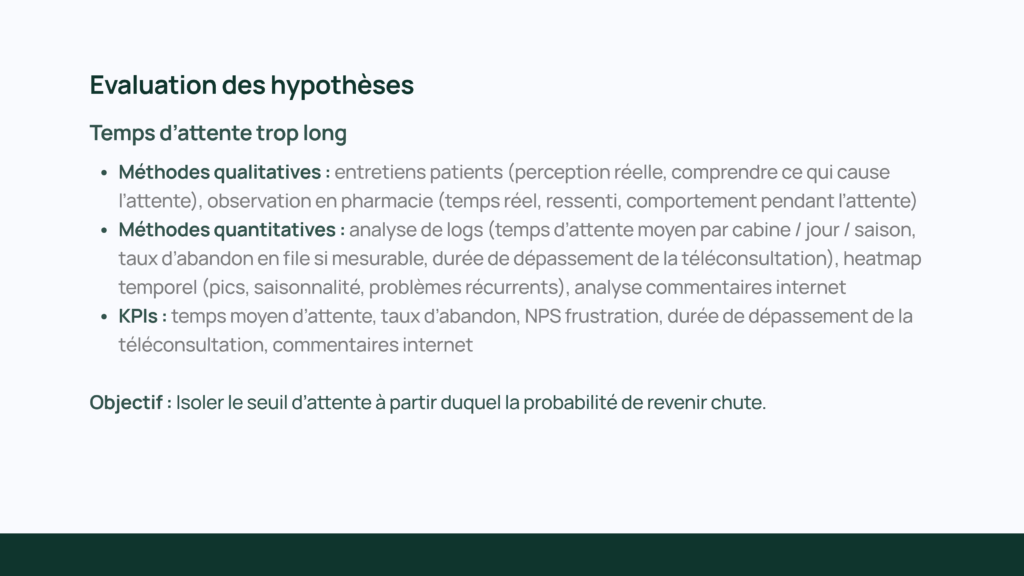
To validate these hypotheses, I defined evaluation methods combining patient interviews, in-pharmacy observations, analysis of existing logs, temporal patterns of usage, and online reviews. The goal was to identify clear thresholds, especially around waiting time, beyond which the probability of a patient returning dropped significantly.
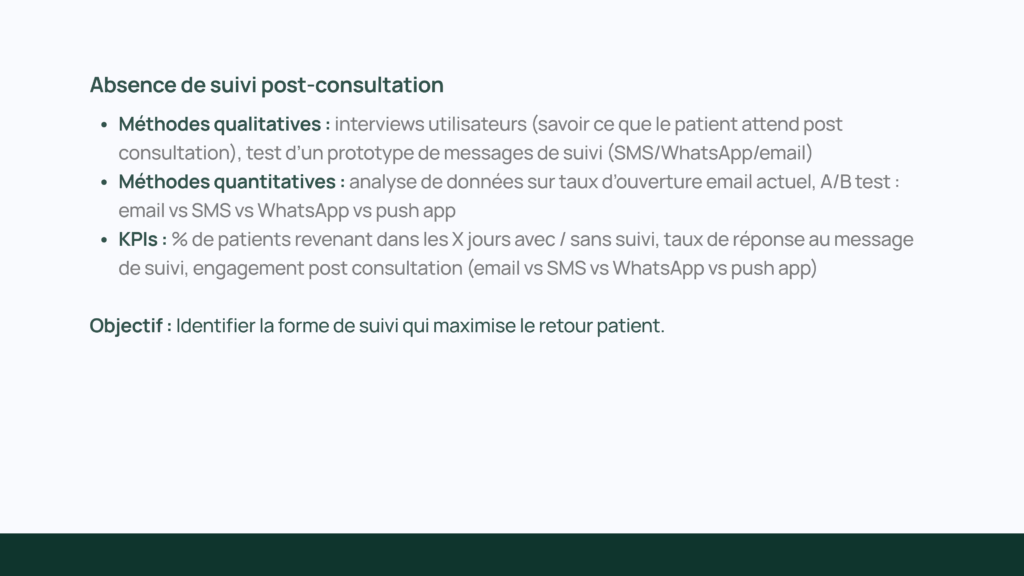
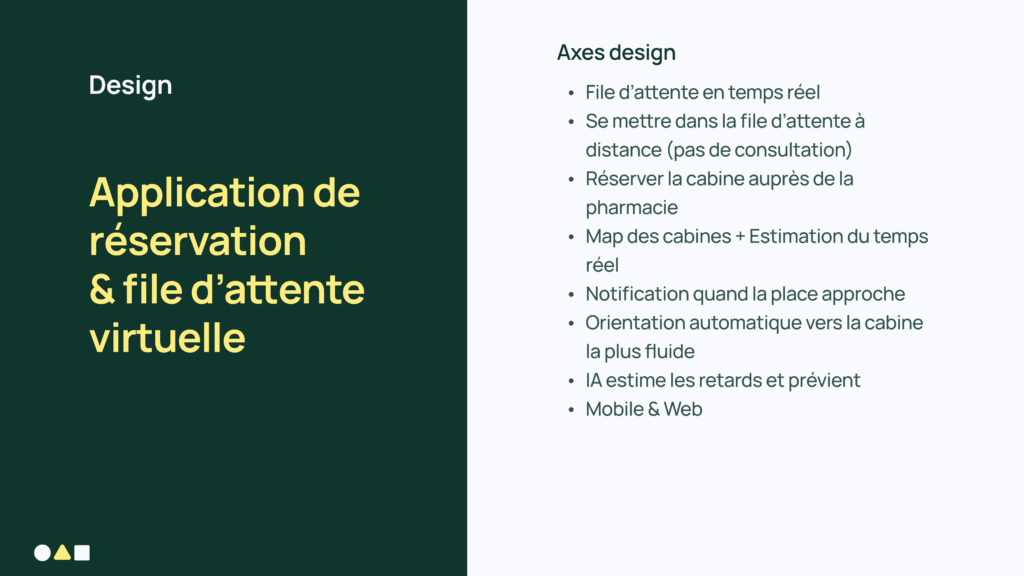
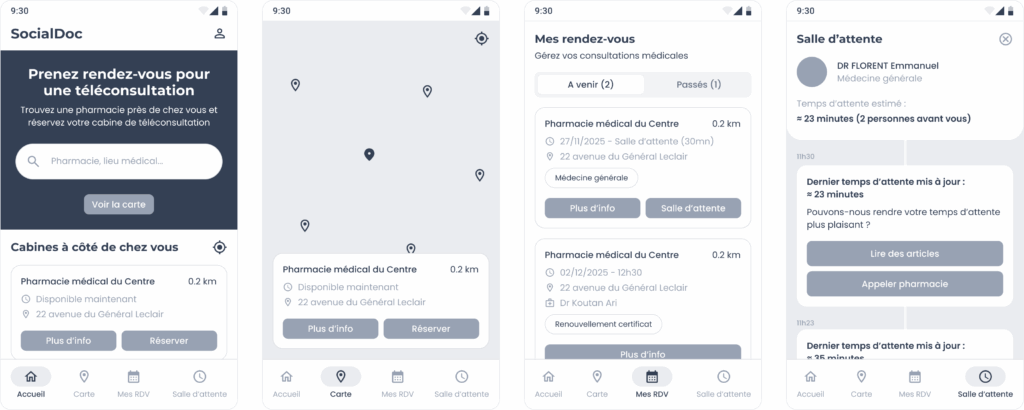
Based on these insights, I formulated a set of design recommendations targeting the main retention levers. The first and most strategic solution was the design of a reservation system and virtual waiting queue, allowing patients to see real-time availability, join a queue remotely, receive notifications, and be oriented toward the least congested cabin. This aimed to reduce uncertainty, stress, and perceived waiting time while increasing transparency.
Additional recommendations included a post-consultation follow-up application to create continuity of care, tools with AI to support doctors in delivering more consistent and reassuring consultations, detecting stress and more with the patient’s voice, improvements to the cabin experience to reduce stress and reinforce trust, and simplified flows for recurring consultation needs.
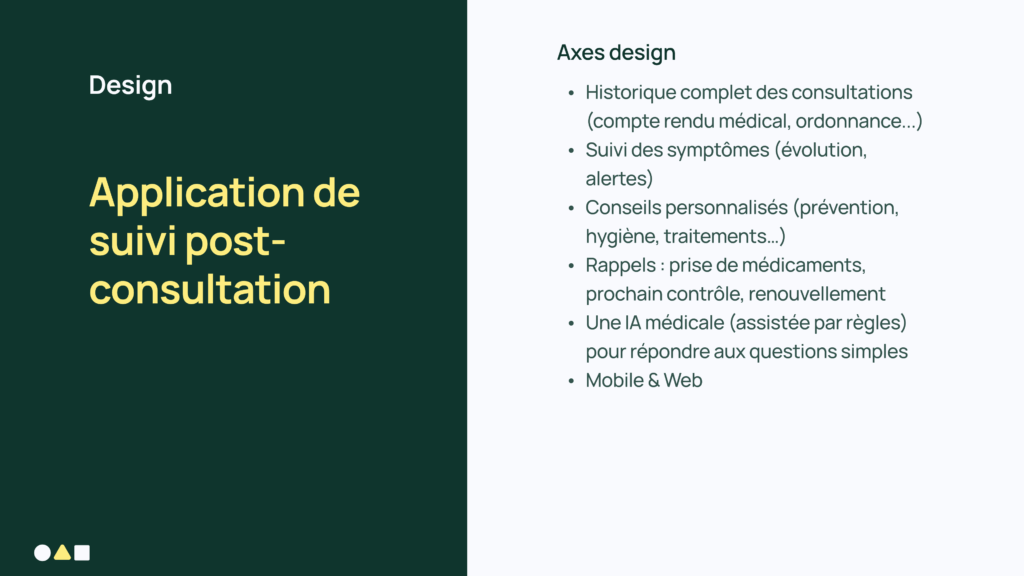
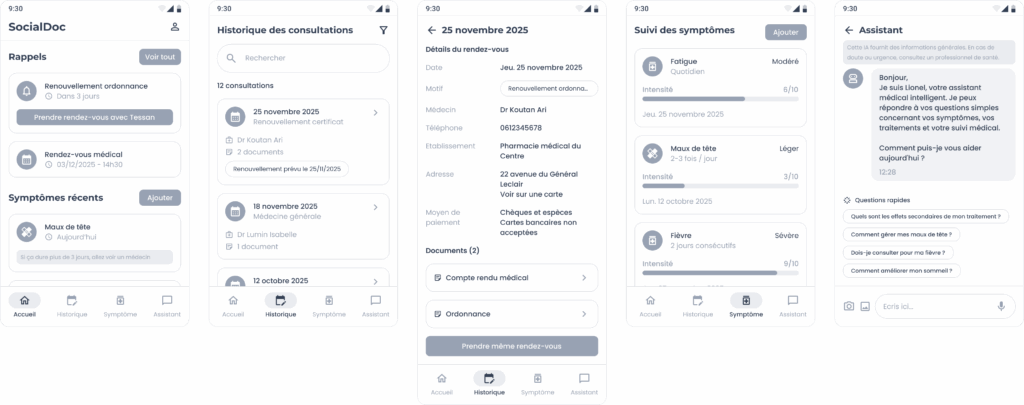
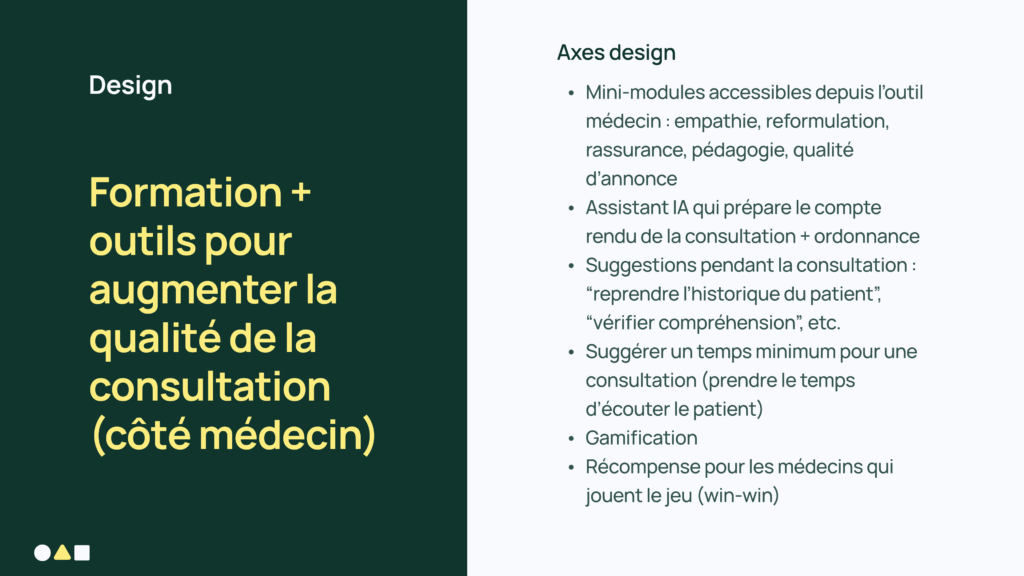
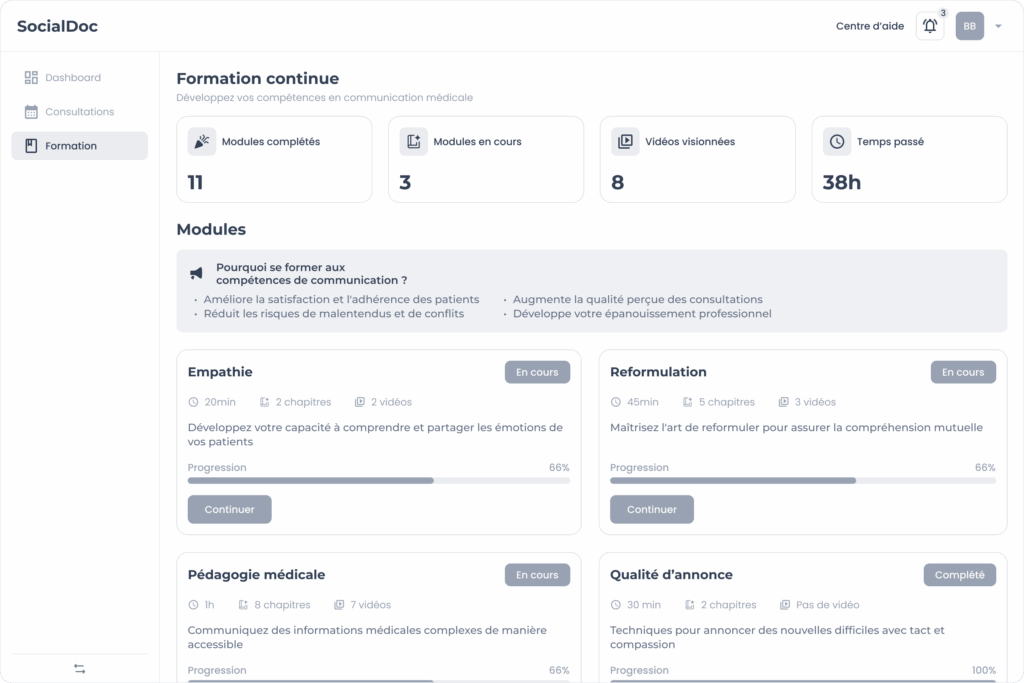
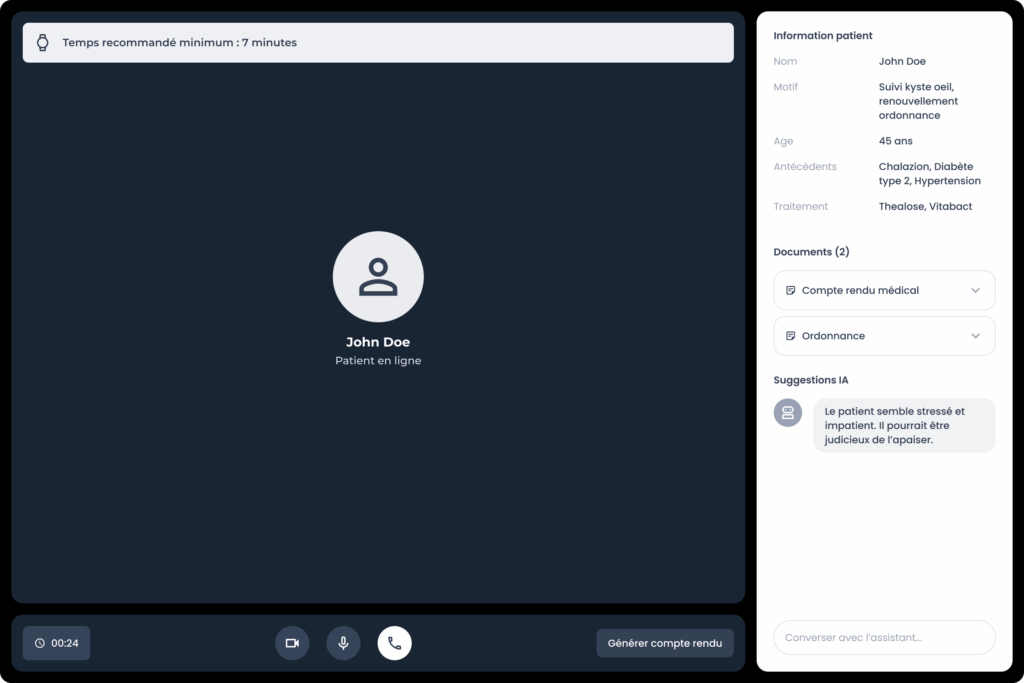
Each recommendation was documented with the problem addressed, the expected impact on retention, and the relevant KPIs. I also worked on a high-level roadmap, identifying implementation priorities, MVP scope, testing strategies, and potential risks. Following internal alignment, the team chose to prioritise the virtual waiting queue solution as the first initiative, as it addressed the most critical pain point and had the strongest potential impact on patient retention.