

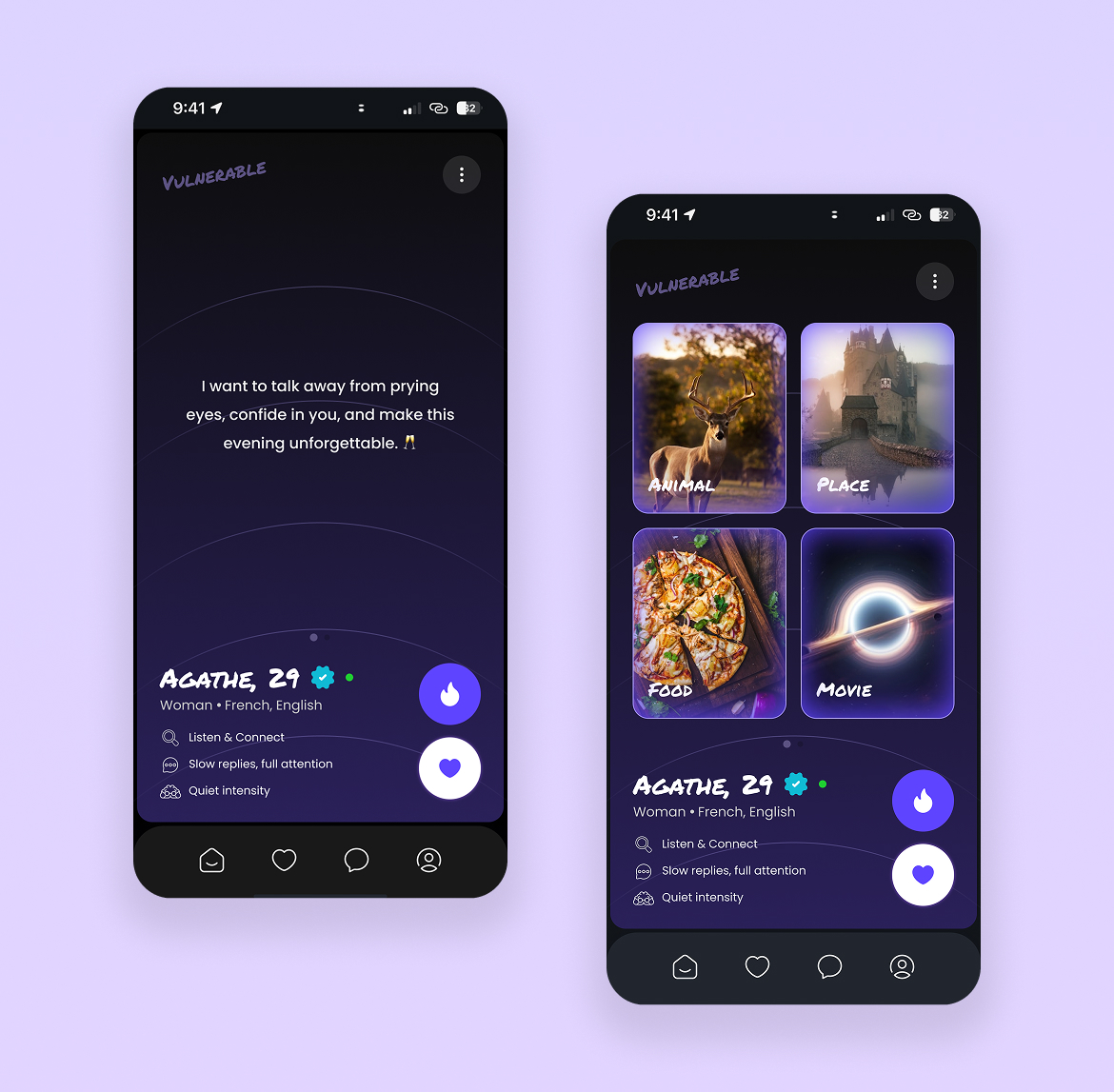
Hush is an anonymous chat application designed to foster authentic connections without relying on physical appearance. The product explores a radically different approach to online interaction, where attraction is driven by emotional resonance rather than visual identity.
As part of a design case study for Hush, I worked on a deep emotional design exploration, focusing on multi-sensory experiences: micro-interactions, sound design, haptics, motion, and atmosphere. The core challenge was clear: how to make a profile engaging and desirable while fully preserving user anonymity.
My proposal was built around a strong conceptual shift. Instead of asking users to create a visual identity, Hush invites them to create an emotional identity. The profile is no longer a showcase but an emotional imprint. Users are not recognized by a face, but by their mood, intentions, words, and the way they choose to be approached. Desire emerges from emotional resonance rather than appearance.
The product promise summarizes the concept:
“Show who you feel like, not who you look like.”
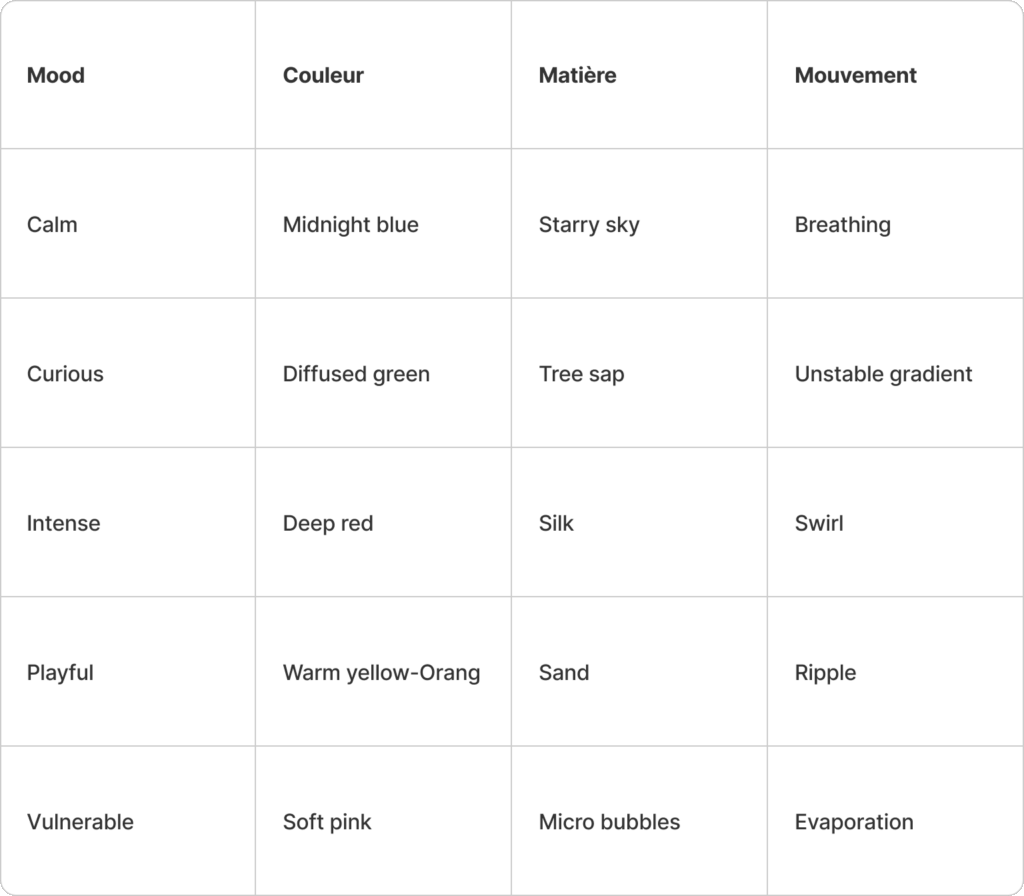
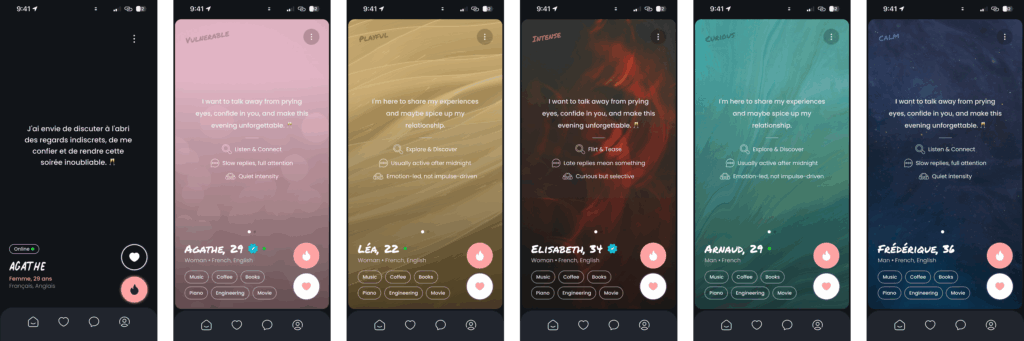
At the heart of the experience lies the notion of “mood of the day”. Once per day, users are invited to select their current mood. This choice is not meant to describe who they are, but how they want to interact today. The selected mood dynamically shapes the profile’s atmosphere by influencing background visuals, motion, and micro-interactions, while never revealing personal identity.
Each mood is constructed along three complementary dimensions. Color expresses the emotional tone of the profile, material conveys personality through texture and visual feel, and movement communicates relational intensity and availability. Subtle micro-effects triggered by touch, such as soft visual ripples, gentle vibrations, or muted organic sounds, reinforce the sensory experience and create discreet signals of desire without breaking anonymity.
The first profile screen focuses on emotional availability rather than identity. Alongside a short profile sentence, three micro-traits act as weak signals of attraction. They express what the user is looking for, their response rhythm, and their emotional posture. These elements do not explain the person; they create curiosity and invite connection.
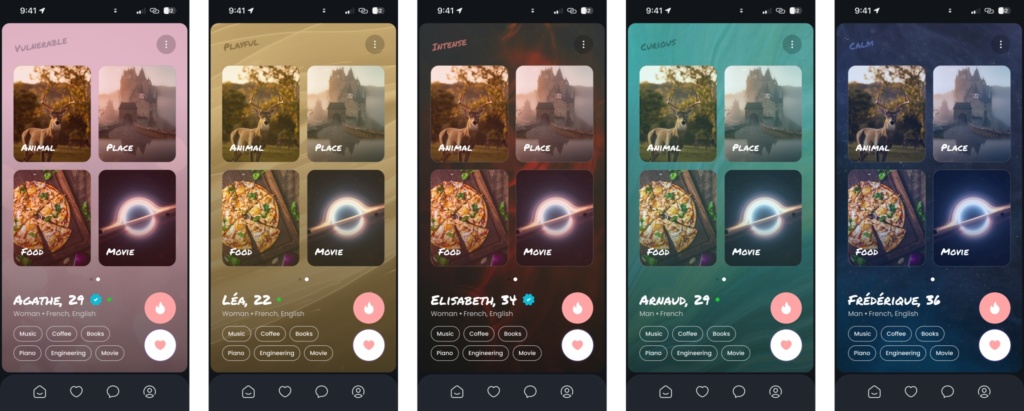
To deepen discovery while preserving anonymity, the second profile layer reinterprets a popular social trend, “How I see me”. Instead of showing themselves, users represent their inner world through associations. They choose images that symbolize emotional or sensory themes such as an animal, a place, a movie, a season, a color, or a hobby. Each choice becomes an indirect fragment of identity, turning the profile into a space of projection and offering natural conversation starters.
Work has started to give a darker vibe on the app, and keep this atmosphere:
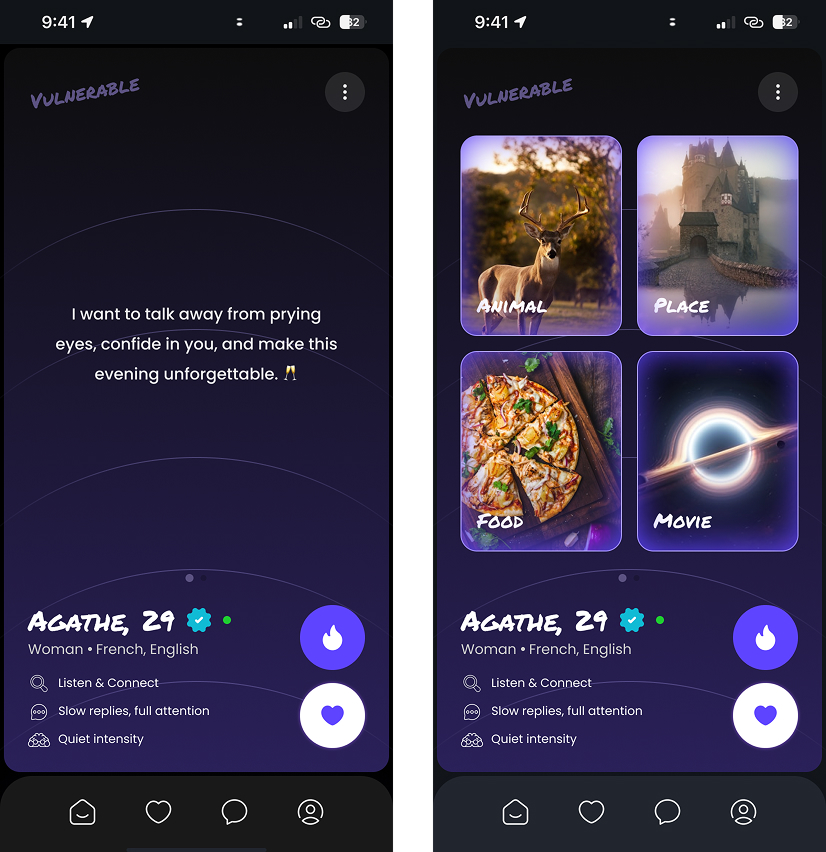
For this case study, I delivered visual designs and an interactive prototype to demonstrate how emotional identity, sensory feedback, and micro-interactions could work together to create desire, intimacy, and connection without ever relying on physical appearance.