

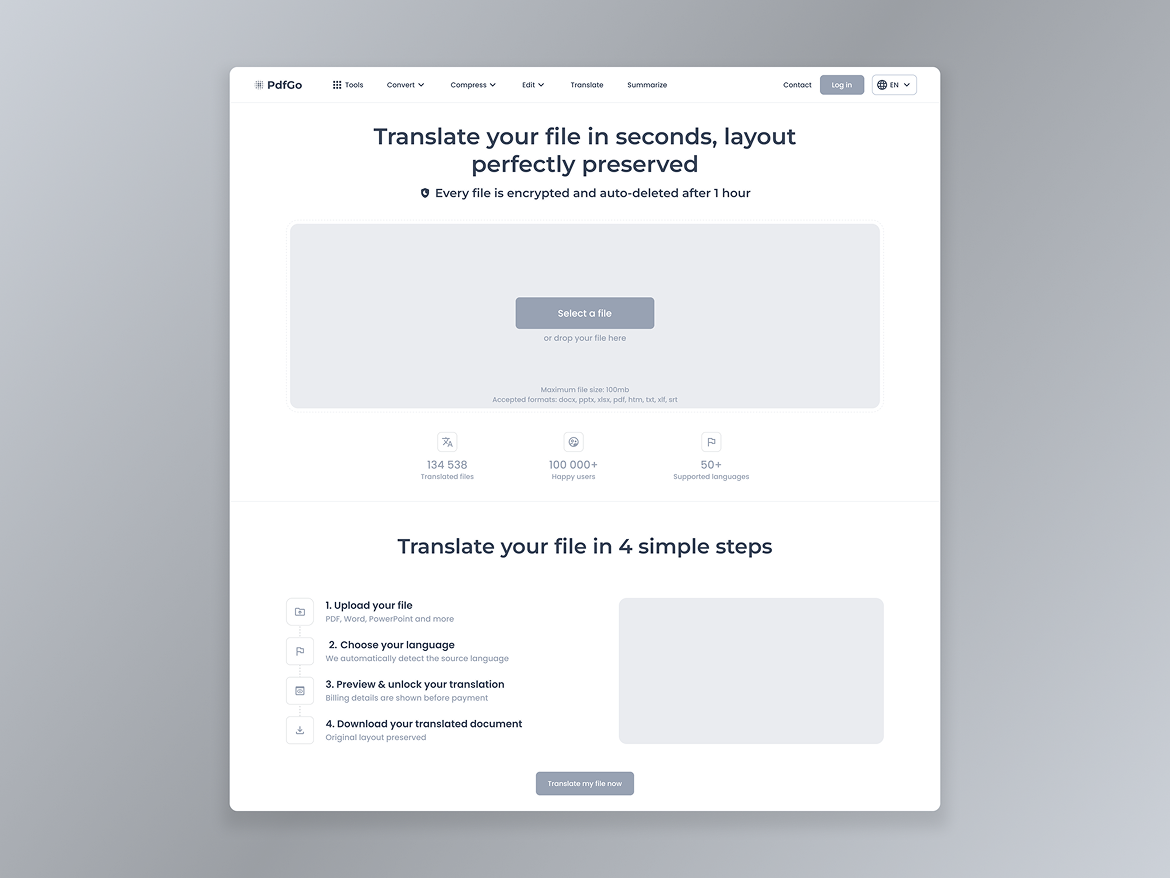
PdfGo operates in a highly competitive space where simplicity is critical: online document translation. Users expect instant results, transparency around pricing, and zero friction. Yet many tools still lose users along the way through unclear value propositions, hidden costs, or overly technical interfaces. PdfGo’s challenge was not about adding features but about fixing the experience to unlock growth.
I joined PdfGo as a UX consultant with a clear mission: audit the existing product and improve the conversion funnel of the file translation tool, with a strong focus on conversion rate, average basket value, churn and retention.
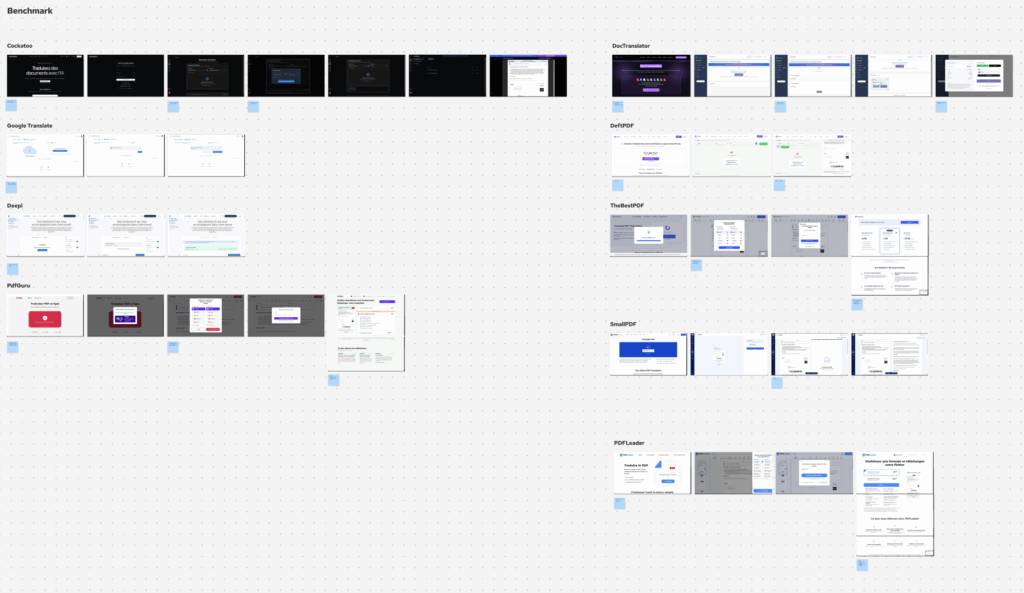
The project started with an in-depth benchmark of direct and indirect competitors. I analyzed their onboarding flows, pricing strategies, UI patterns and micro-interactions identifying both UX/UI frictions and best practices worth adopting. This competitive analysis helped clarify market standards and where PdfGo could differentiate through clarity and trust.
I then conducted a detailed UX audit across the entire translation journey, step by step: uploading a file, language selection, preview and payment, and final download. Even though data from Hotjar clearly showed the biggest drop-offs occurring on the homepage and at checkout, my approach was to treat the funnel as a whole. Each step had to reinforce the same promise: fast, reliable translation with no surprises.
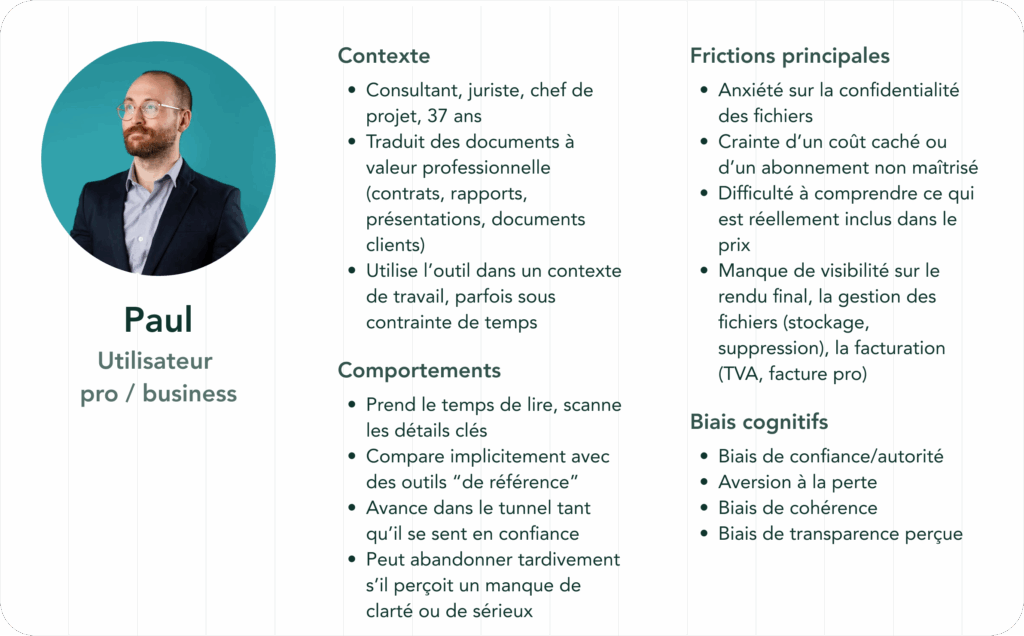
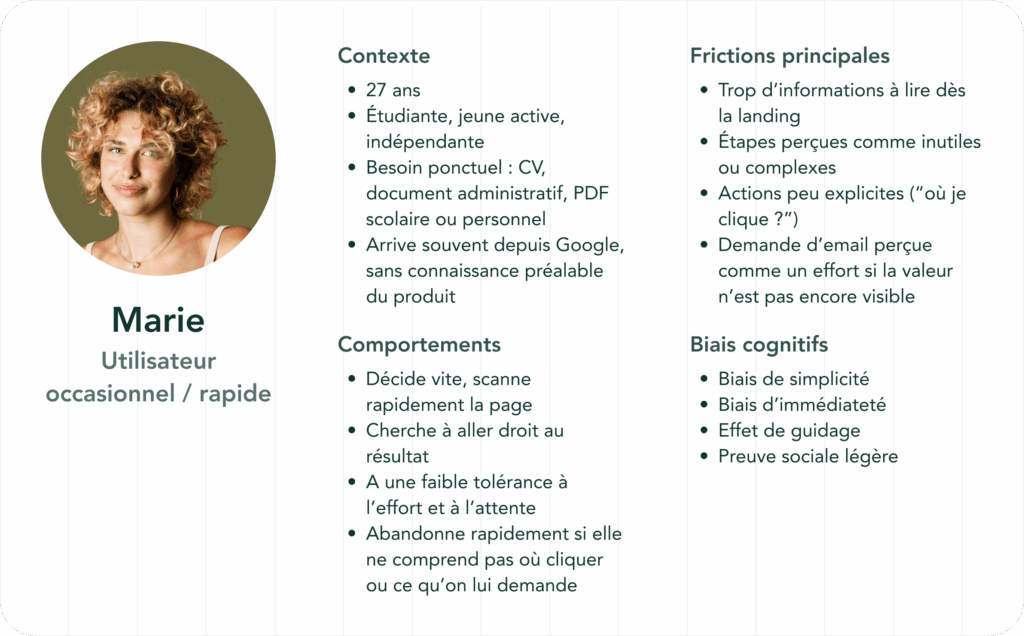
By combining behavioral data (session recordings, heatmaps) with UX heuristics, I identified key friction points: lack of reassurance on the homepage, cognitive overload during file upload, insufficient pricing transparency at checkout, and weak projection of the final value before payment.
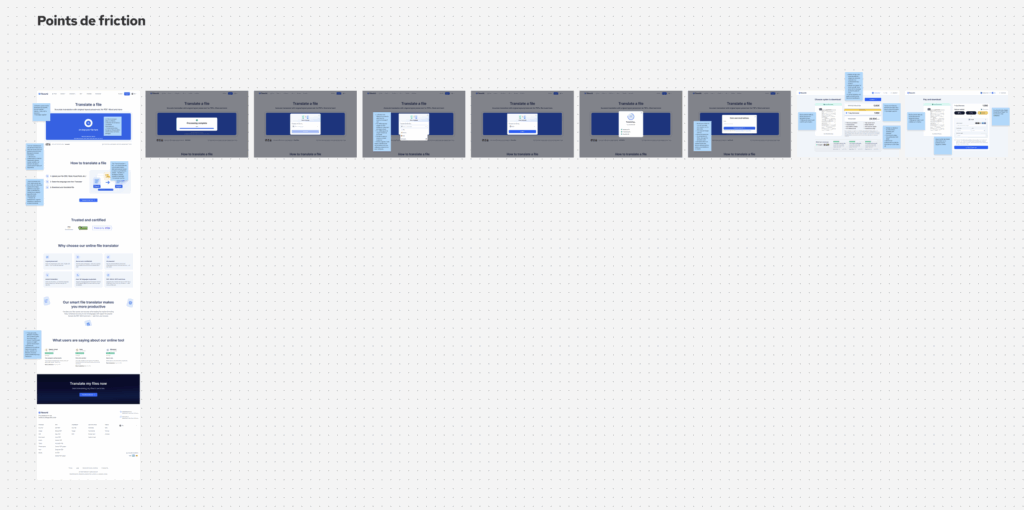
Once the audit phase was completed, I designed concrete UX and UI solutions for every step of the funnel. These included clearer messaging and hierarchy on the homepage, simplified upload and language selection flows, stronger reassurance signals before payment, and a more explicit preview of the translated output. The goal was to reduce hesitation, increase perceived value, and make the conversion path feel natural rather than forced.
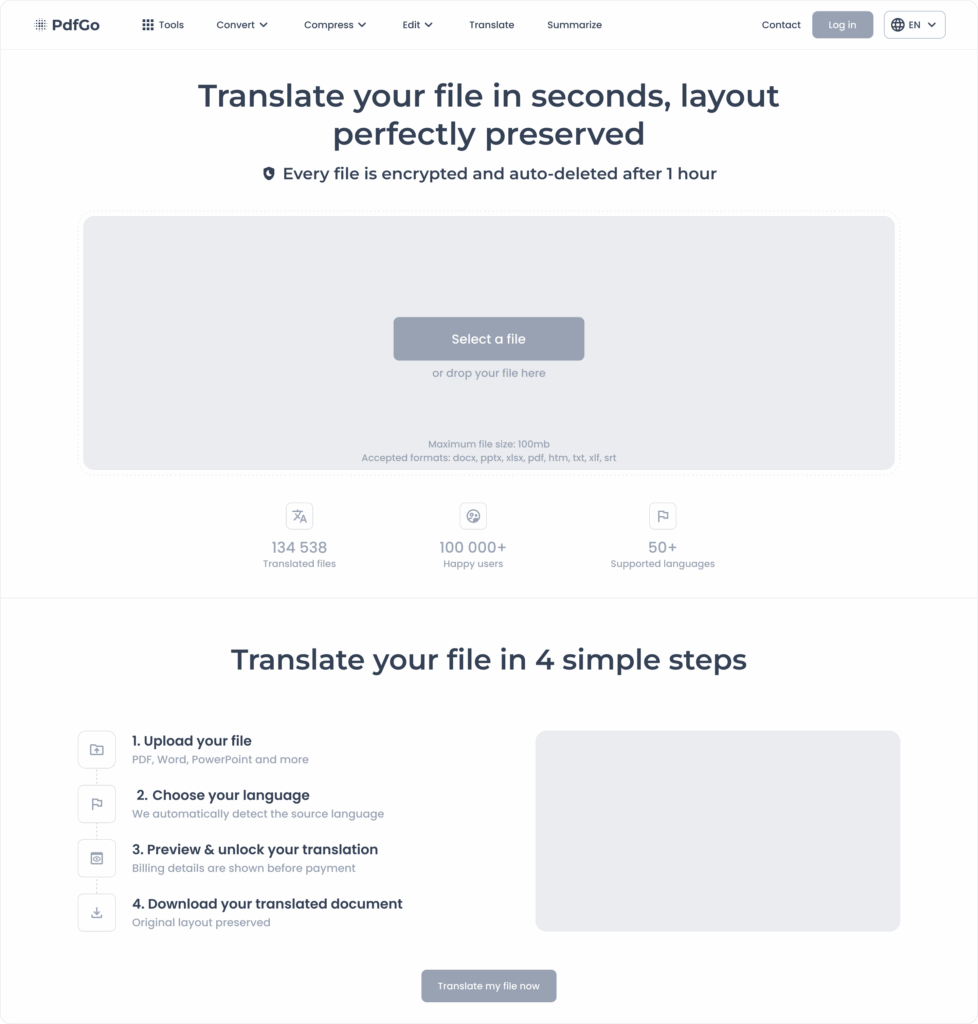
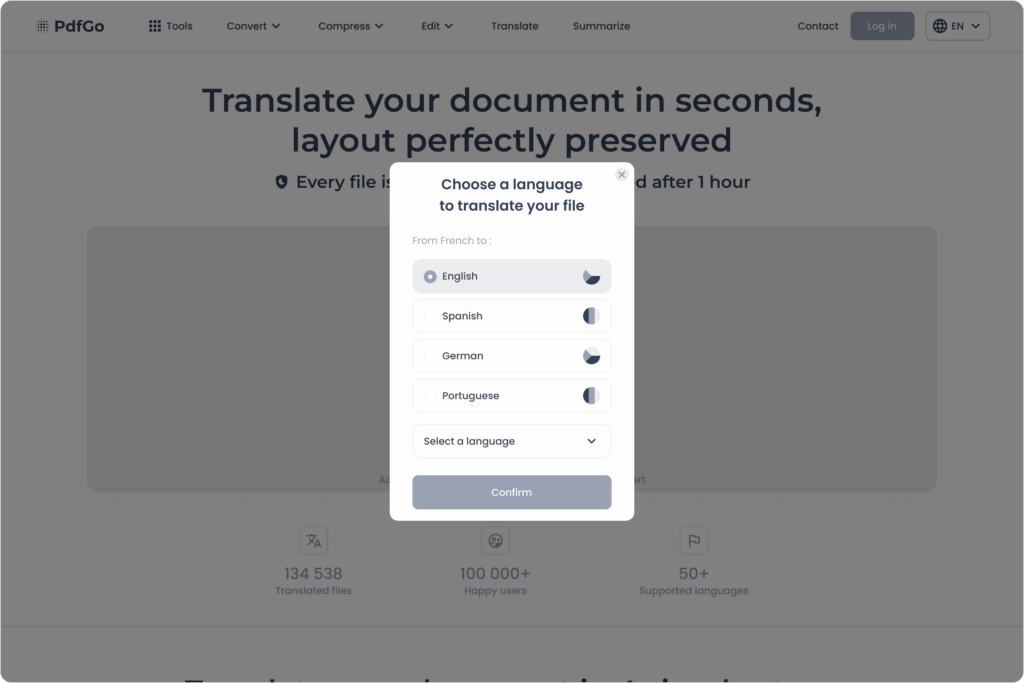
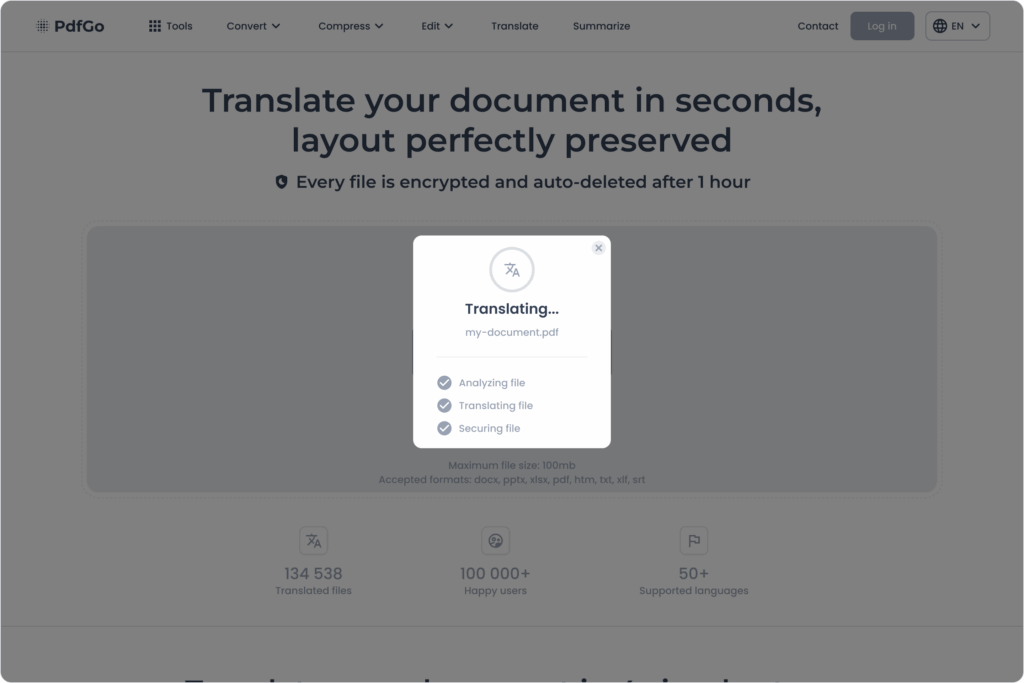
To materialize these recommendations, I delivered high-fidelity wireframes for both mobile and desktop, illustrating a redesigned end-to-end experience aligned with user expectations and business objectives. These deliverables served as a clear foundation for implementation and future optimization.
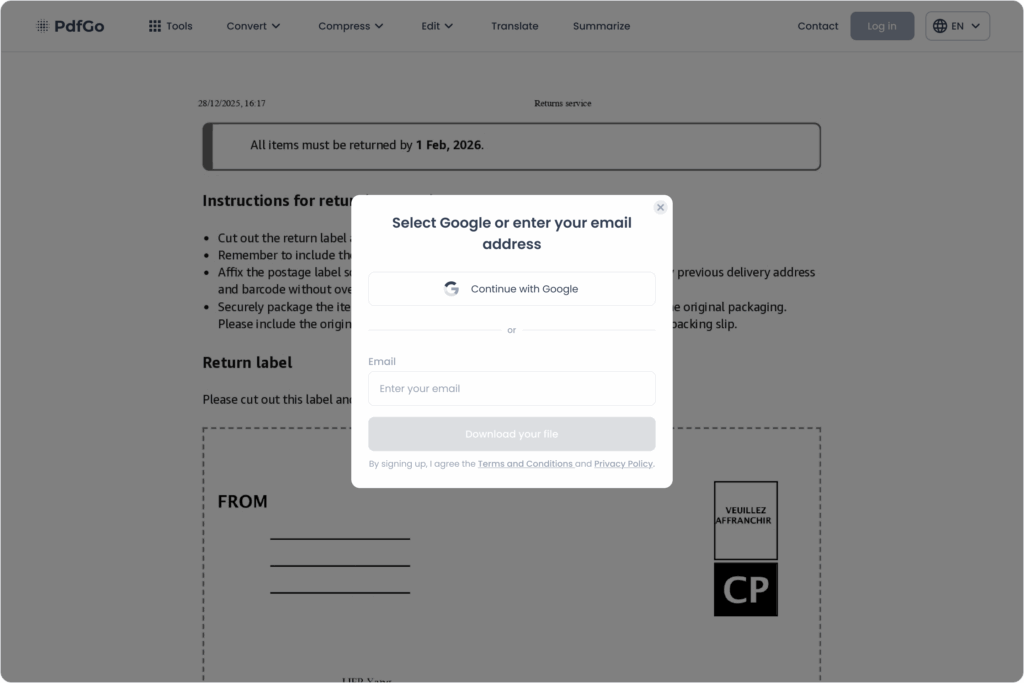
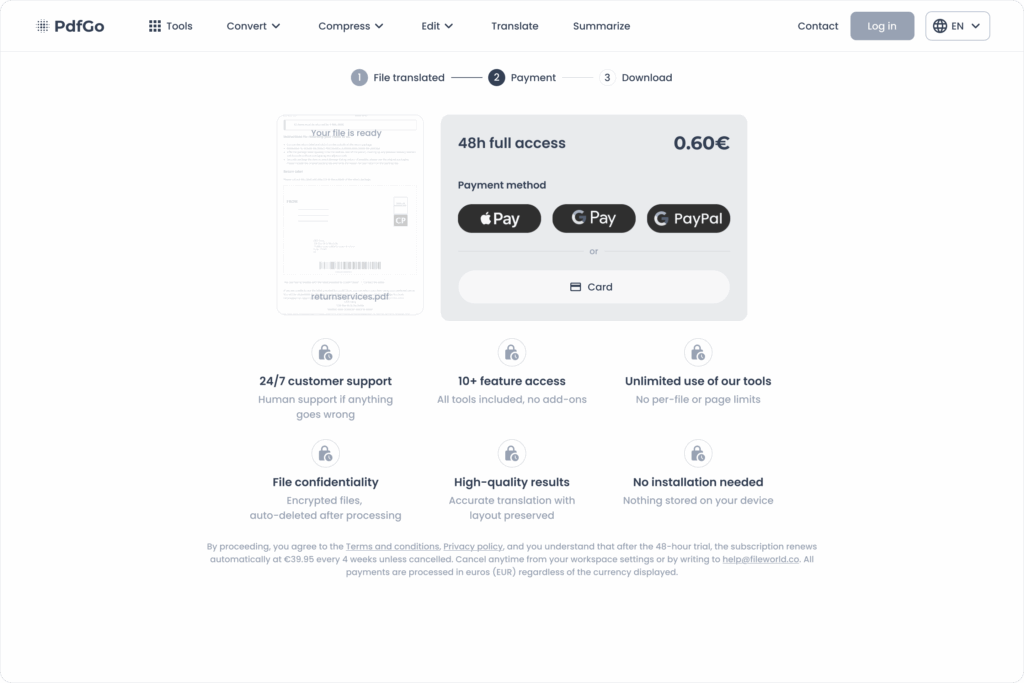
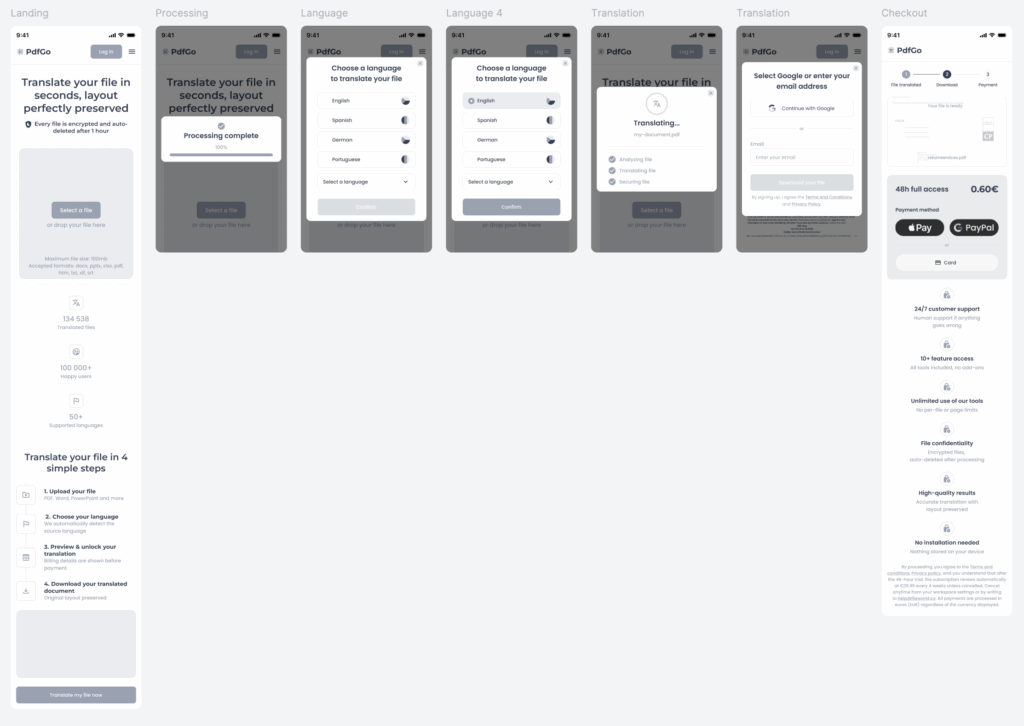
The outcome was a conversion-oriented redesign grounded in data not assumptions. PdfGo gained a clearer roadmap to improve funnel performance, reduce drop-offs (23%) and strengthen user trust, turning a functional tool into a more persuasive and scalable product experience.